


Most site furniture is selected once the landscape has already taken shape. In the Östern residential quarter in Sundbyberg, outside Stockholm, the process unfolded in the opposite direction.
Commissioned to create the artistic programme for two residential courtyards, Swedish designers Färg & Blanche developed L’Arbre à Lune – a series of illuminated sculptures standing on organically shaped timber platforms that invite residents to sit, gather and move through the space. The landscape design, developed by Topia Landscape Architects, weaves the artwork into planting, circulation and everyday use, allowing art and landscape to become part of the same spatial experience.
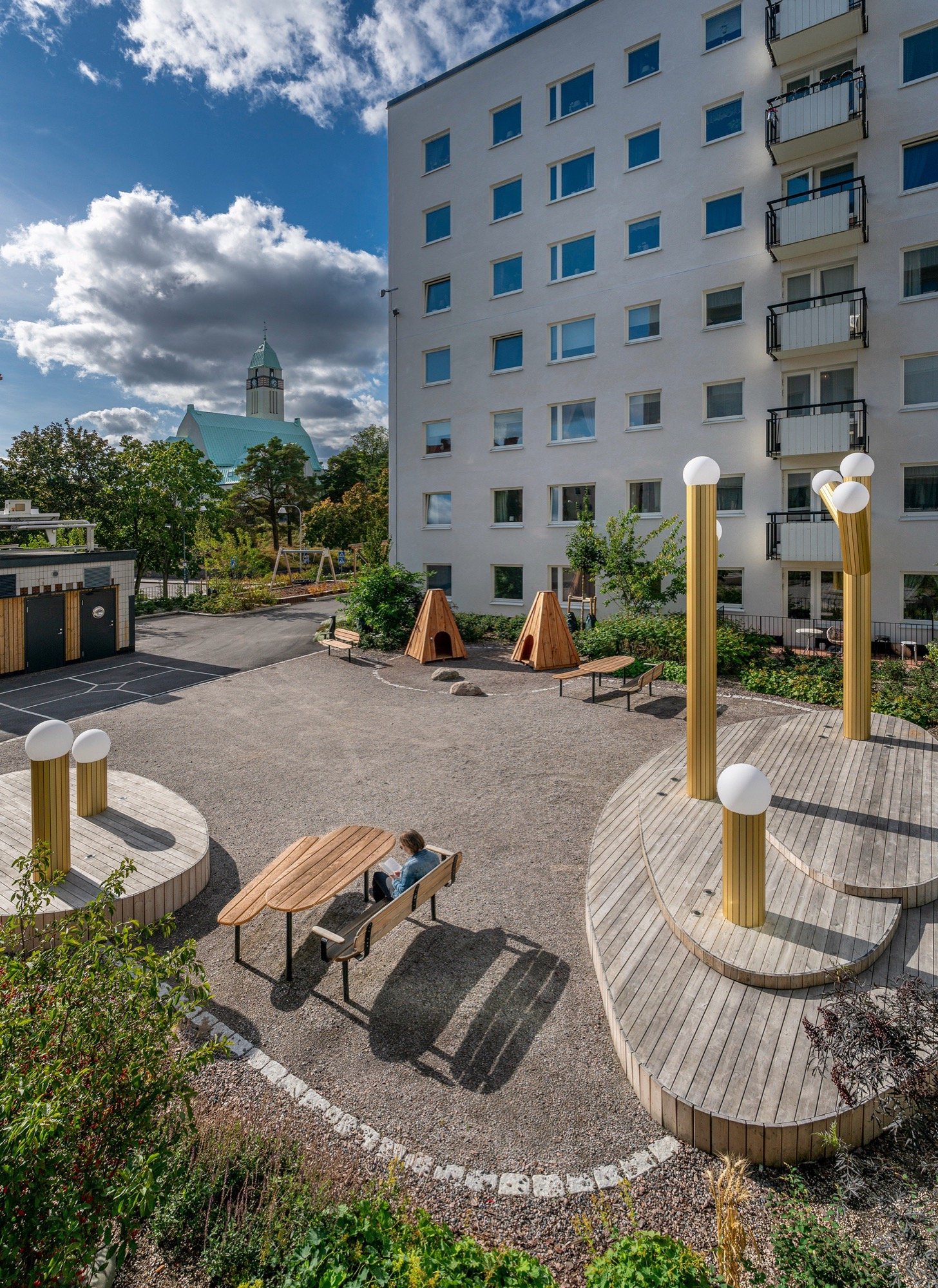
As the project evolved, however, an unexpected question emerged. The conventional picnic tables originally specified for the courtyards no longer belonged to the landscape that was taking shape. Their rectilinear geometry interrupted the softer language of the timber platforms and planting.
Rather than adapting the landscape to an existing product, Färg & Blanche chose to design a new one.
Together with Swedish manufacturer Nola, they developed Island, a series of tables and seating whose asymmetrical geometry continues the movement established by the artwork. Built from a simple steel frame with timber surfaces, the furniture was conceived as an extension of the place rather than an object placed within it.
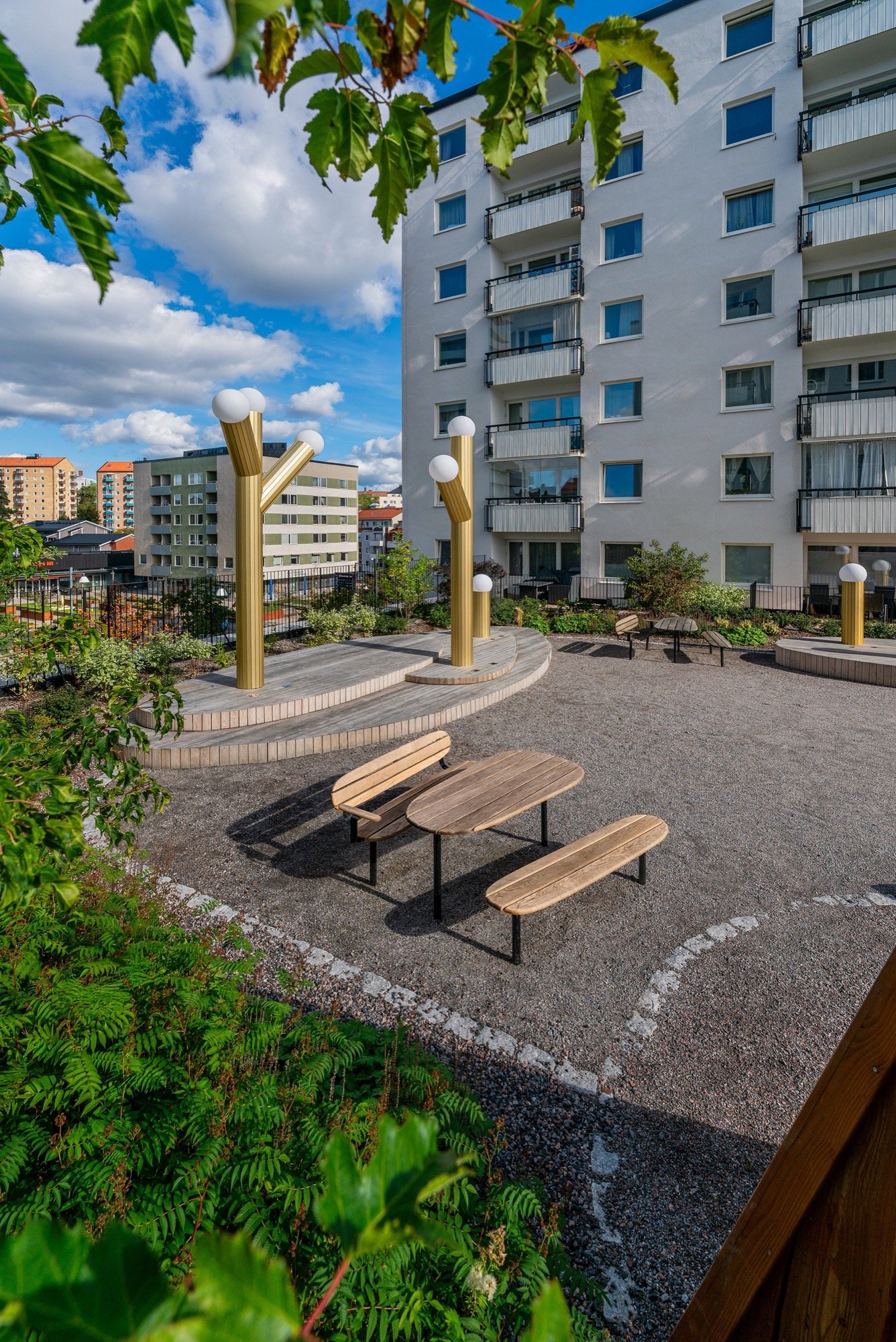
The project also challenged an assumption often embedded in product design. Furniture developed for one highly specific site is generally expected to remain site-specific. Island followed a different trajectory.
As the series developed, Färg & Blanche realised that the same qualities that made it belong in Sundbyberg could allow it to work elsewhere. The soft, organic forms were not tied to the artwork itself, but to a broader idea of how furniture can relate to landscape — less as an object competing for attention, more as something that settles naturally into its surroundings.
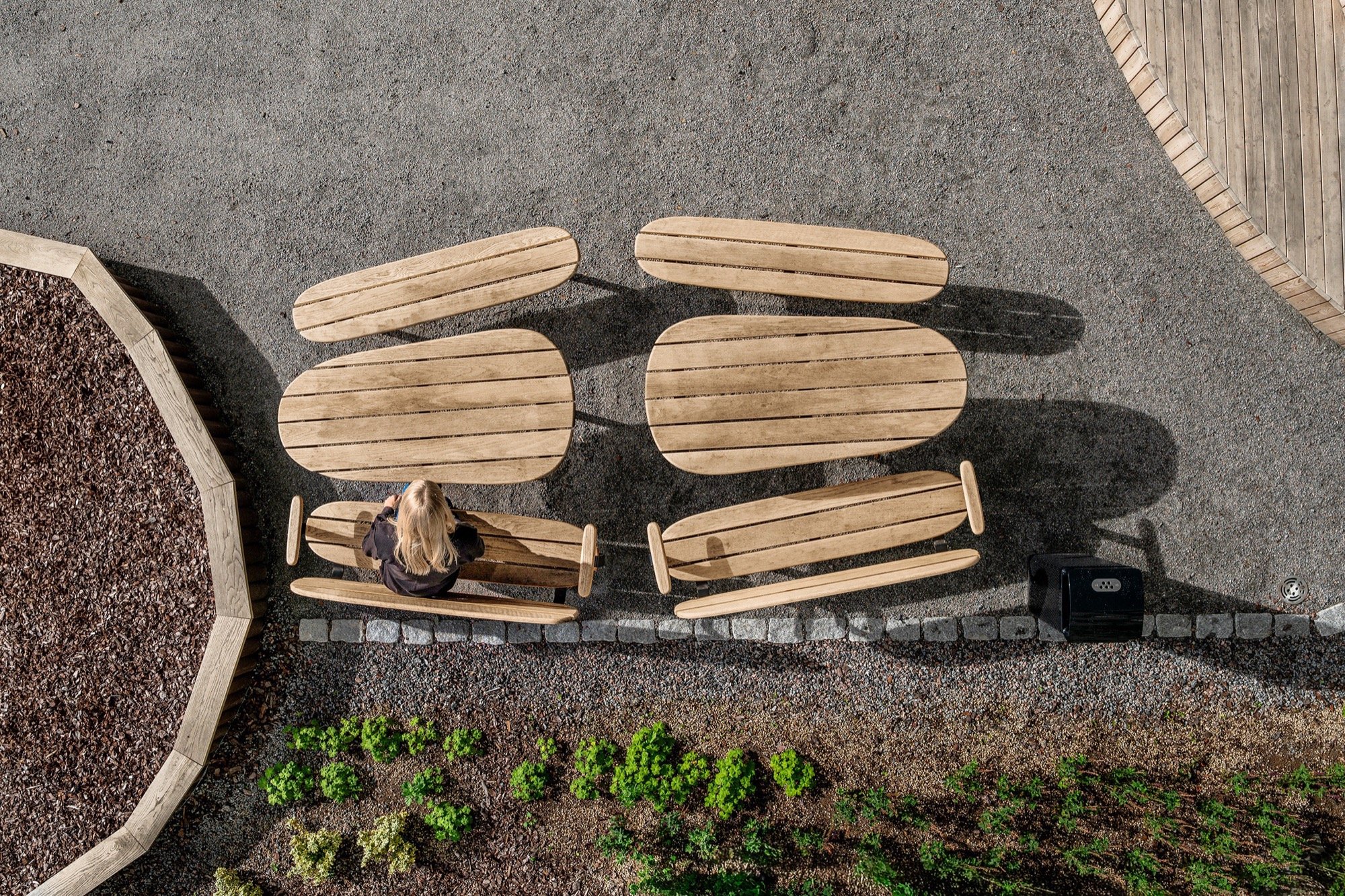
For the designers, organic forms are not simply an aesthetic preference. They describe them as gentler for both the eye and the body, introducing playfulness and asymmetry into public environments that are often dominated by straight lines. In natural settings, they argue, such forms become part of the landscape rather than standing in contrast to it.
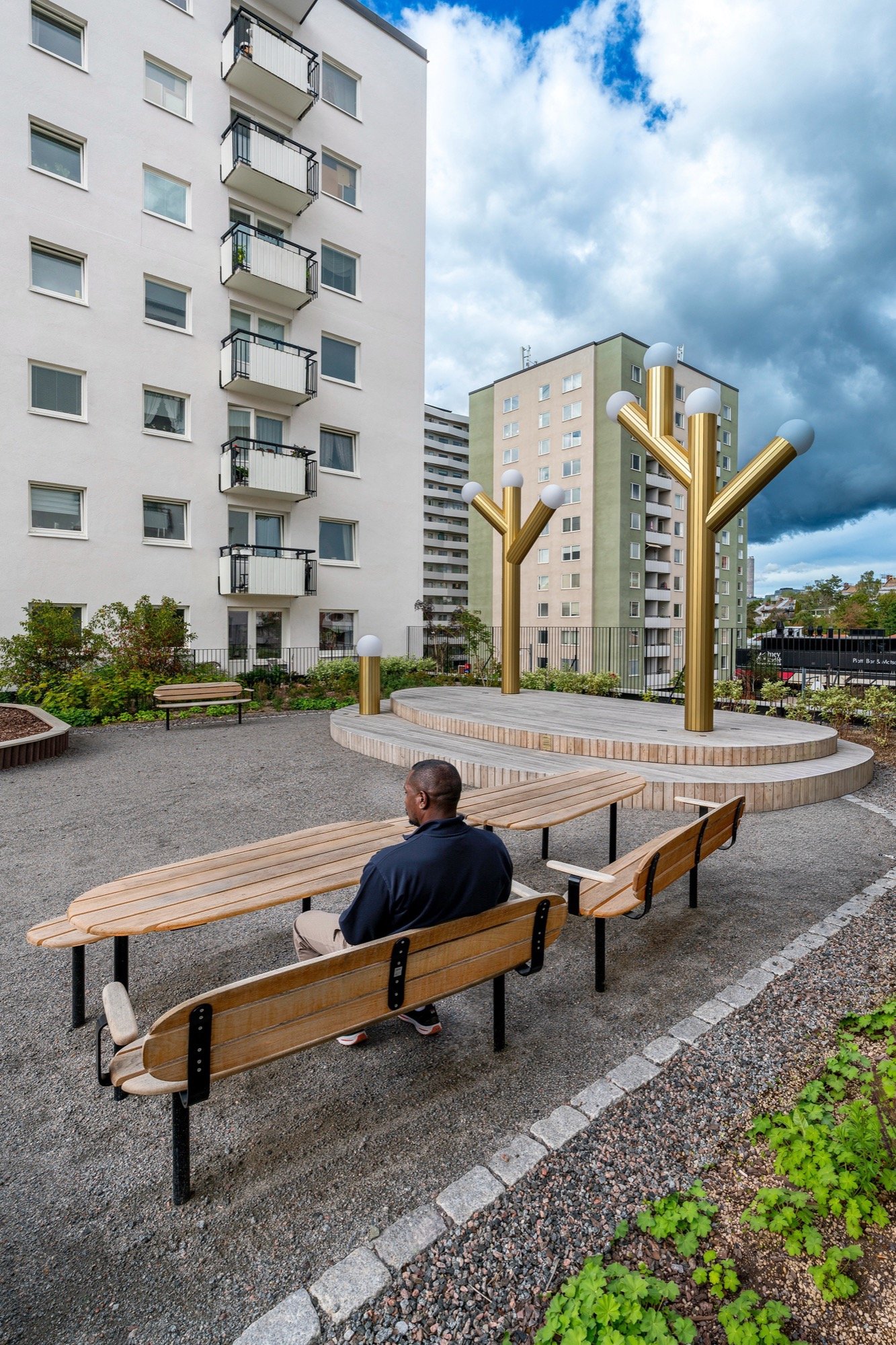
Island therefore carries an unusual origin story. It was not conceived to fill a gap in a catalogue or answer a market brief. It emerged from the needs of a particular place, through the dialogue between art, landscape architecture and product development. That the series has since found its way into other public spaces suggests that specificity and adaptability may not be opposites after all.

