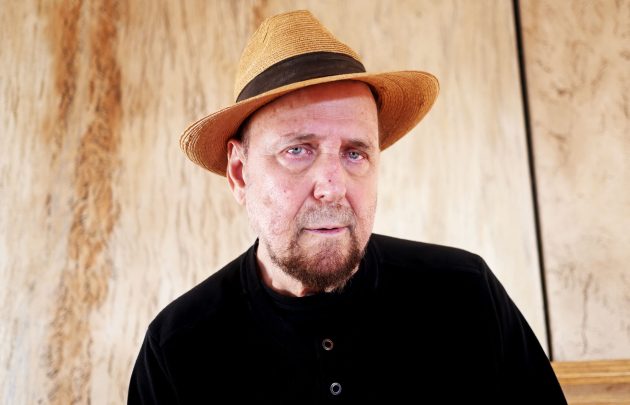
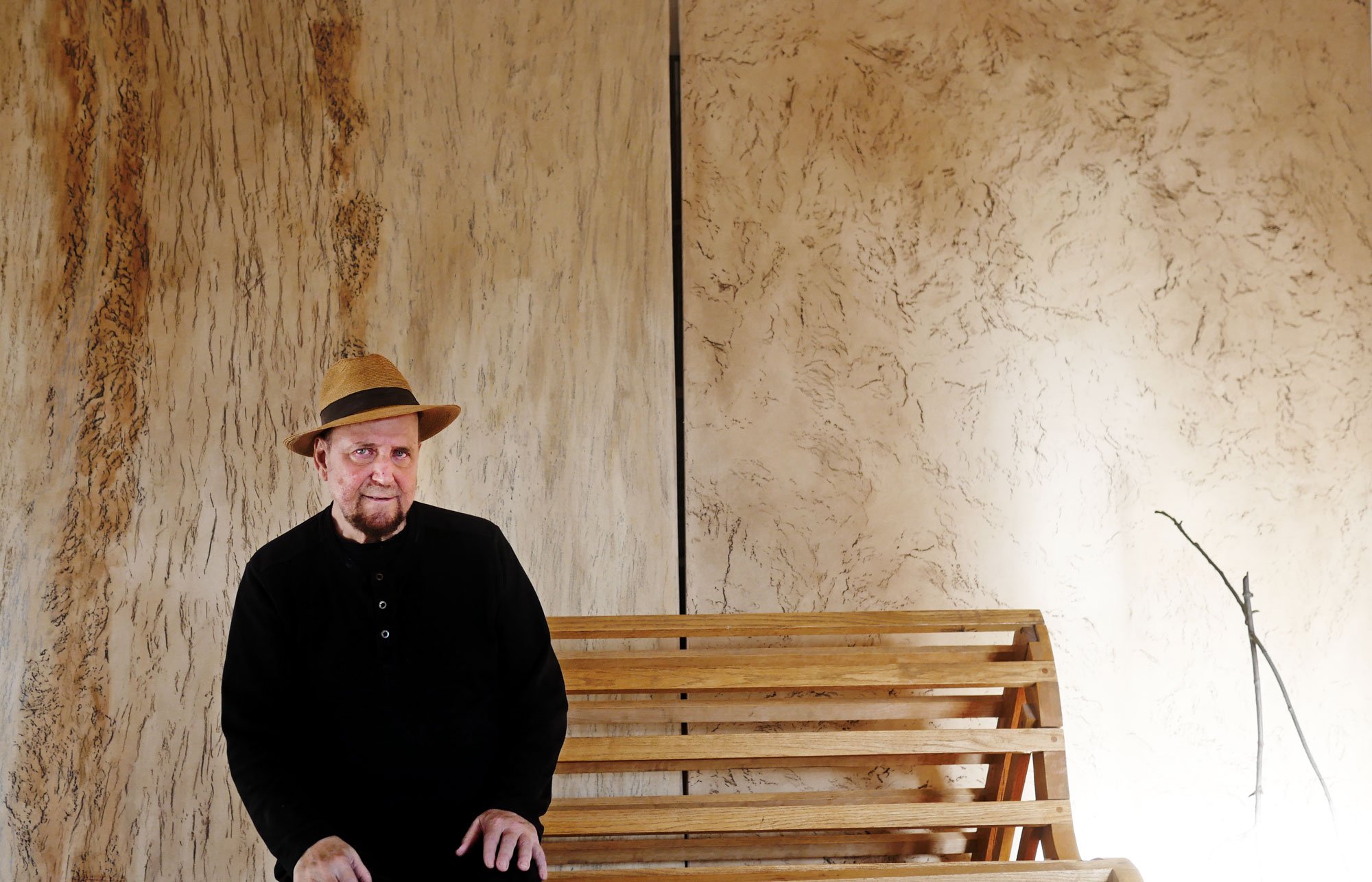
Landezine met American artist Alan Sonfist in his SoHo studio in New York, where we talked about Time Landscape, his early work with living systems, Land Art, visual archaeology and the changing meanings of landscapes over time.
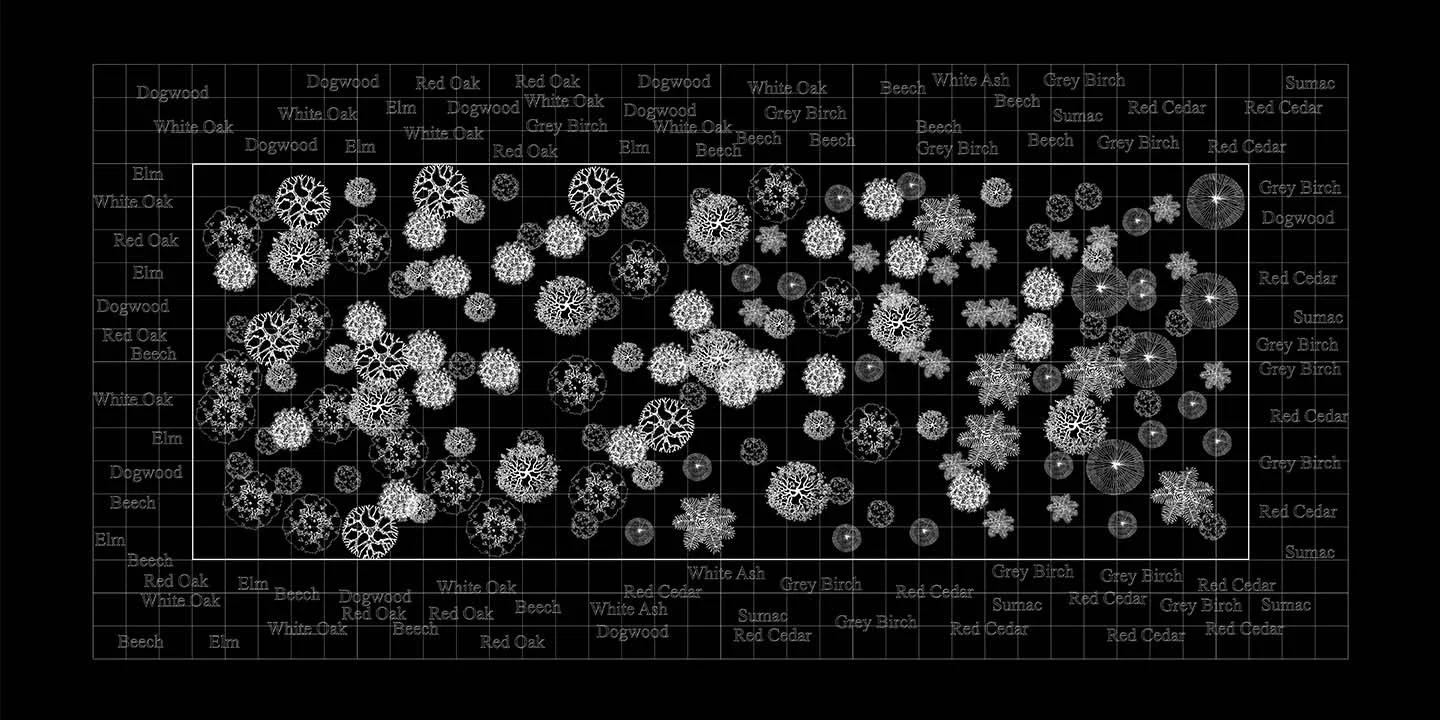
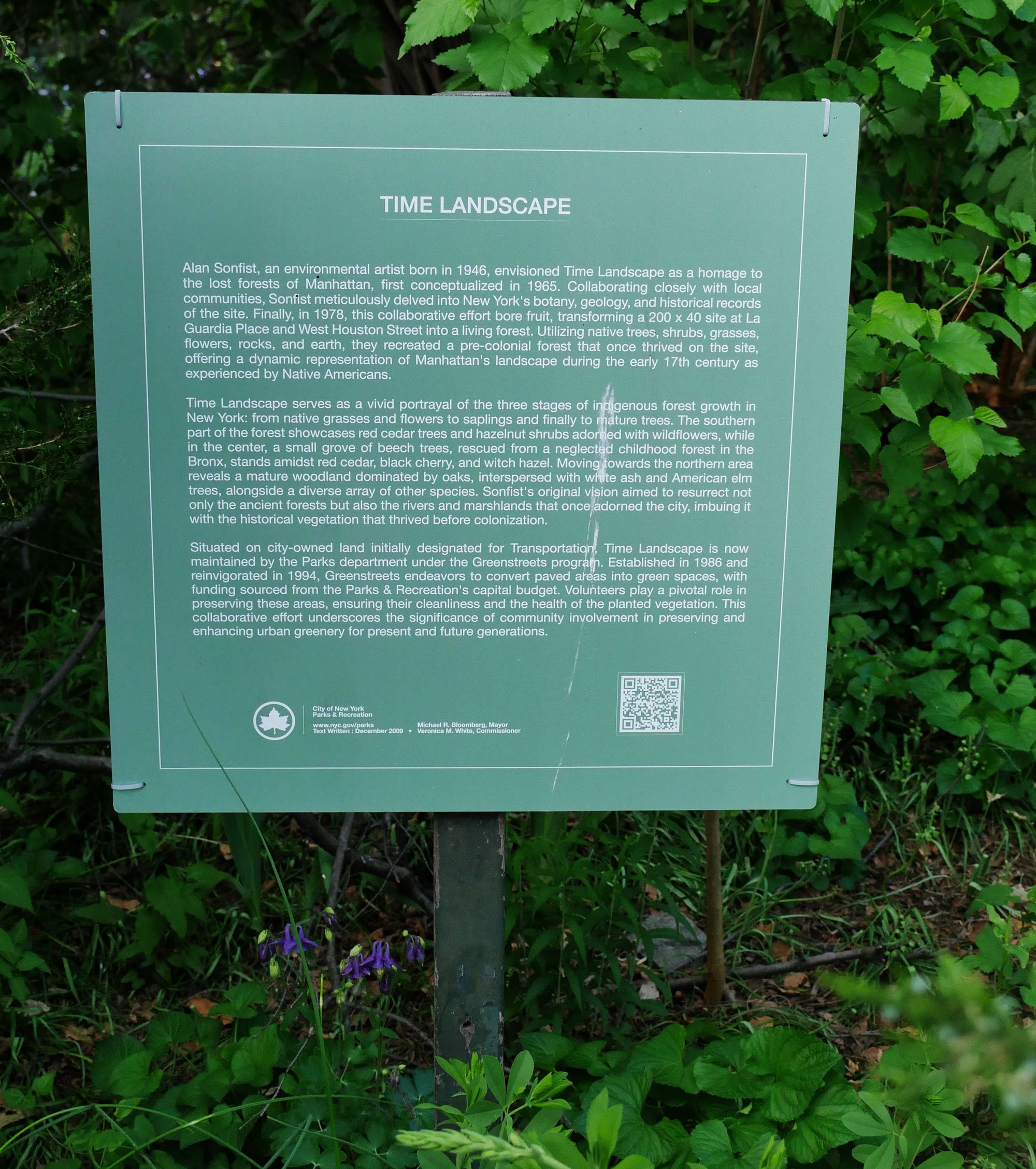
Sonfist first proposed Time Landscape in 1965 with an ostensibly straightforward idea: to bring a part of the landscape that existed before European colonisation back to Manhattan. Its realisation, however, became considerably less straightforward. The project was finally realised on site in 1978.
To reconstruct the earlier landscape, Sonfist relied partly on English colonial records describing the trees settlers encountered and cut. Read from today’s perspective, the work can therefore acquire another meaning: the image of a pre-colonial landscape could return only through records and processes produced by the history that in fact displaced it. Time Landscape can be read not only through the gap between two temporalities, but through the processes connecting them. More than half a century later, its apparent simplicity continues to generate new readings as our understanding of environment, restoration and urban space has been changing.
Landezine: Where did the idea for Time Landscape come from? Was there a particular moment when you understood that people should be able to experience the vegetation that existed before European colonisation?
Alan Sonfist: It evolved gradually from what I was studying at the time with the Gestalt psychologist Hoyt Sherman. He was interested in how one observes and translates thought into visual imagery. His exercises opened the door to my childhood.
My parents used to take me for walks in a hemlock forest near where I grew up, in the South Bronx. My father would point out the wind patterns on the water or the leaves on the ground. It was one of the last ancient forests in New York City and it had been almost totally neglected. I saw deer, foxes and snakes there, and the paths were overgrown because very few people entered it.
The contrast was enormous. The area around it was very destructive: buildings were being burned, gangs were on the streets, there were wild dogs. The concrete landscape felt completely alien compared with this forest. When I was nineteen, studying with Sherman, I asked myself: what is the essence of what I believe in? I kept returning to that forest.
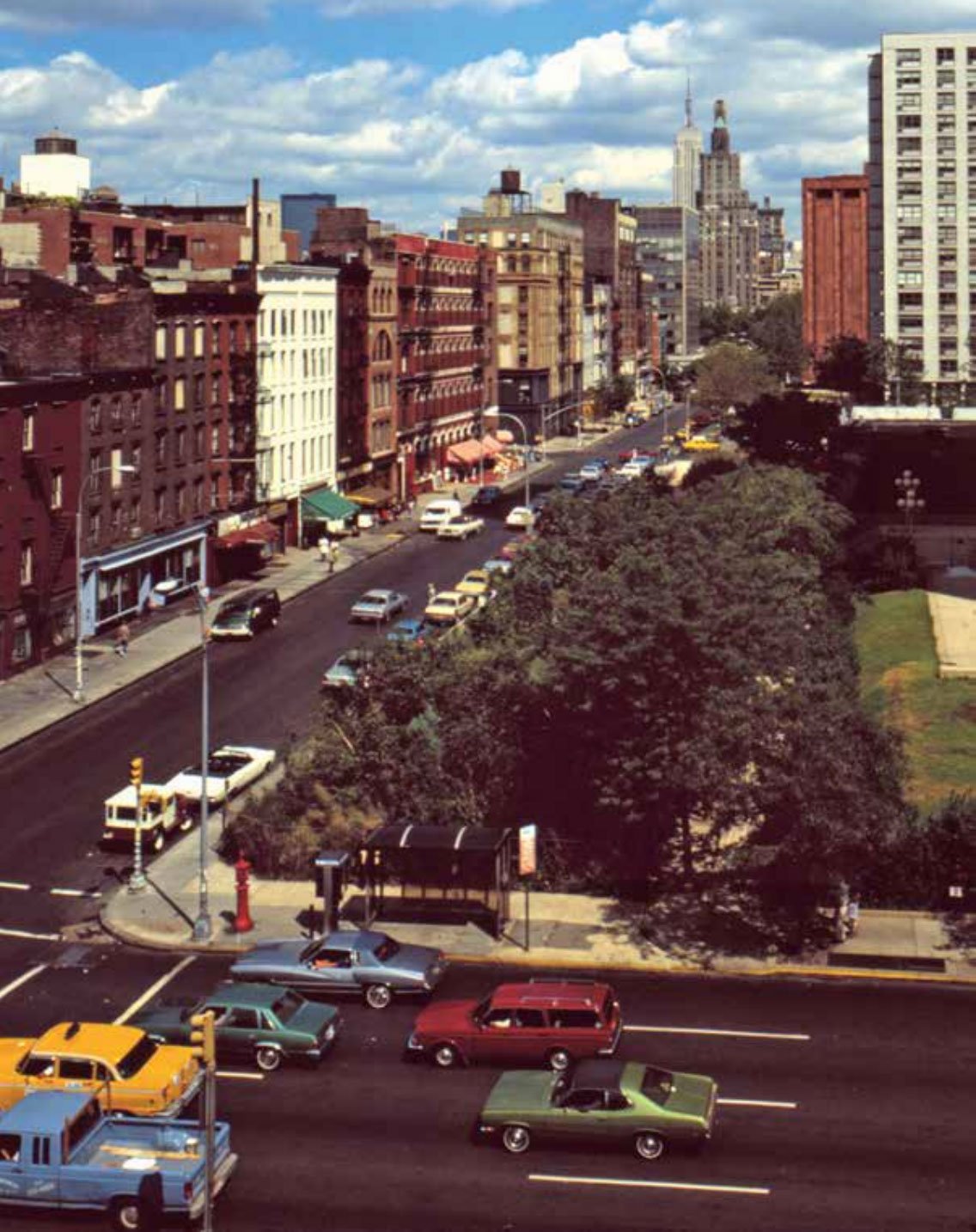
So I wrote to the mayor, the Parks Commissioner and museums in New York, proposing that I create something similar within the city. Thomas Hoving, who had just become Parks Commissioner, wrote back immediately saying that he was interested.
I began researching how New York had looked historically and found early maps in the New York Public Library showing forests, marshlands, streams, and open areas. Those maps became a template. My idea was never simply to create one forest. I proposed different Time Landscapes throughout New York: a forest in one community, perhaps a stream or marshland in another.
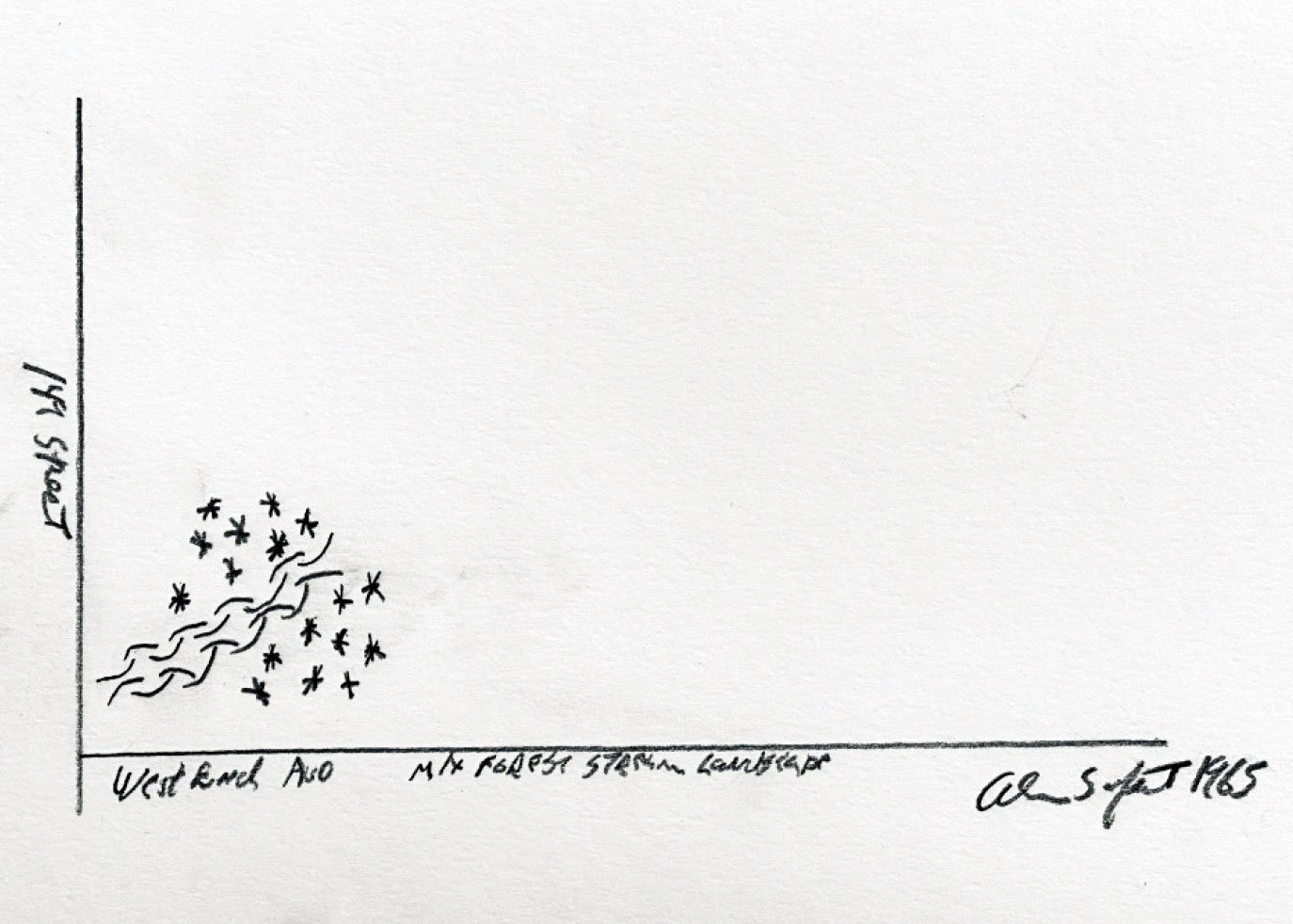
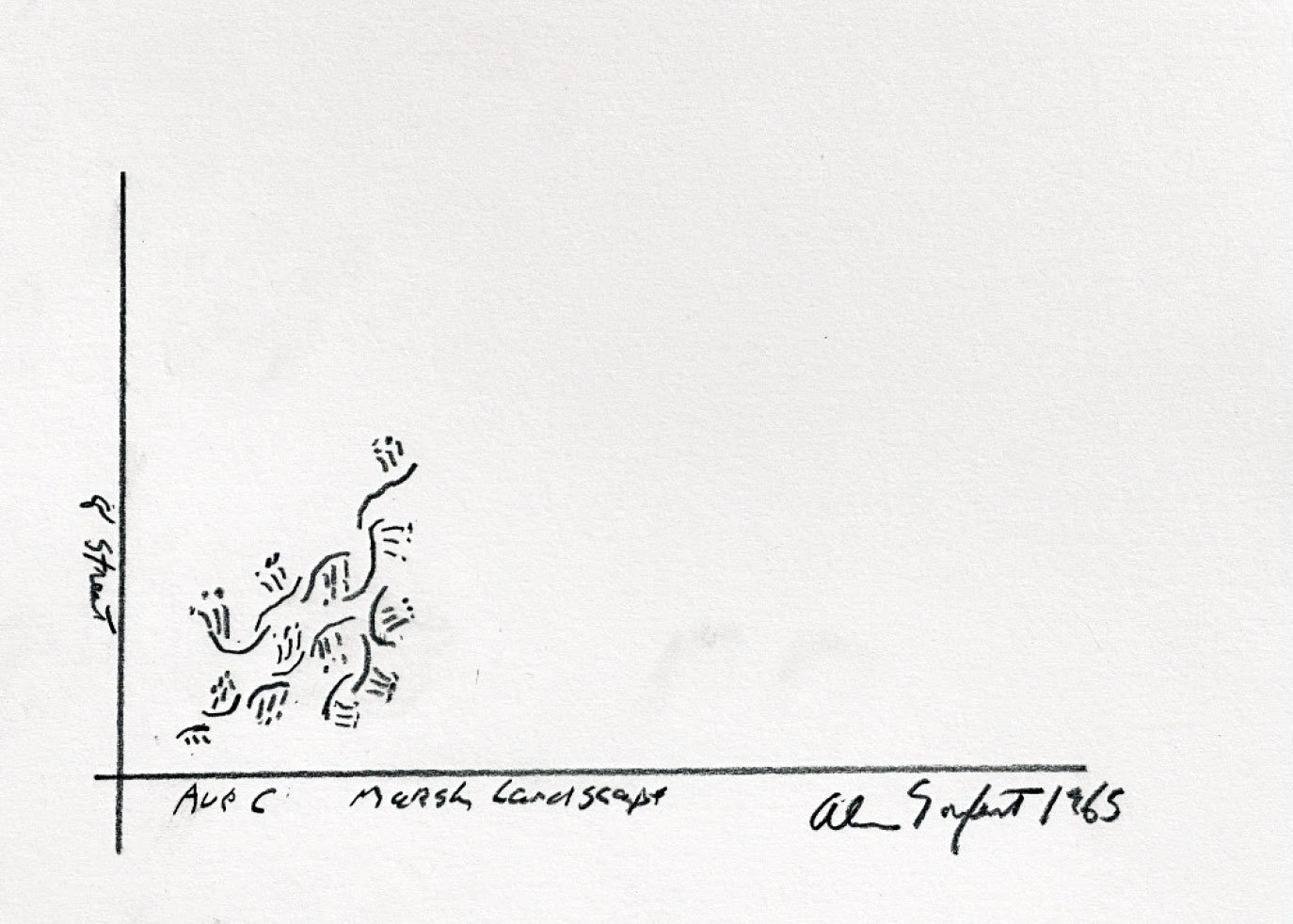
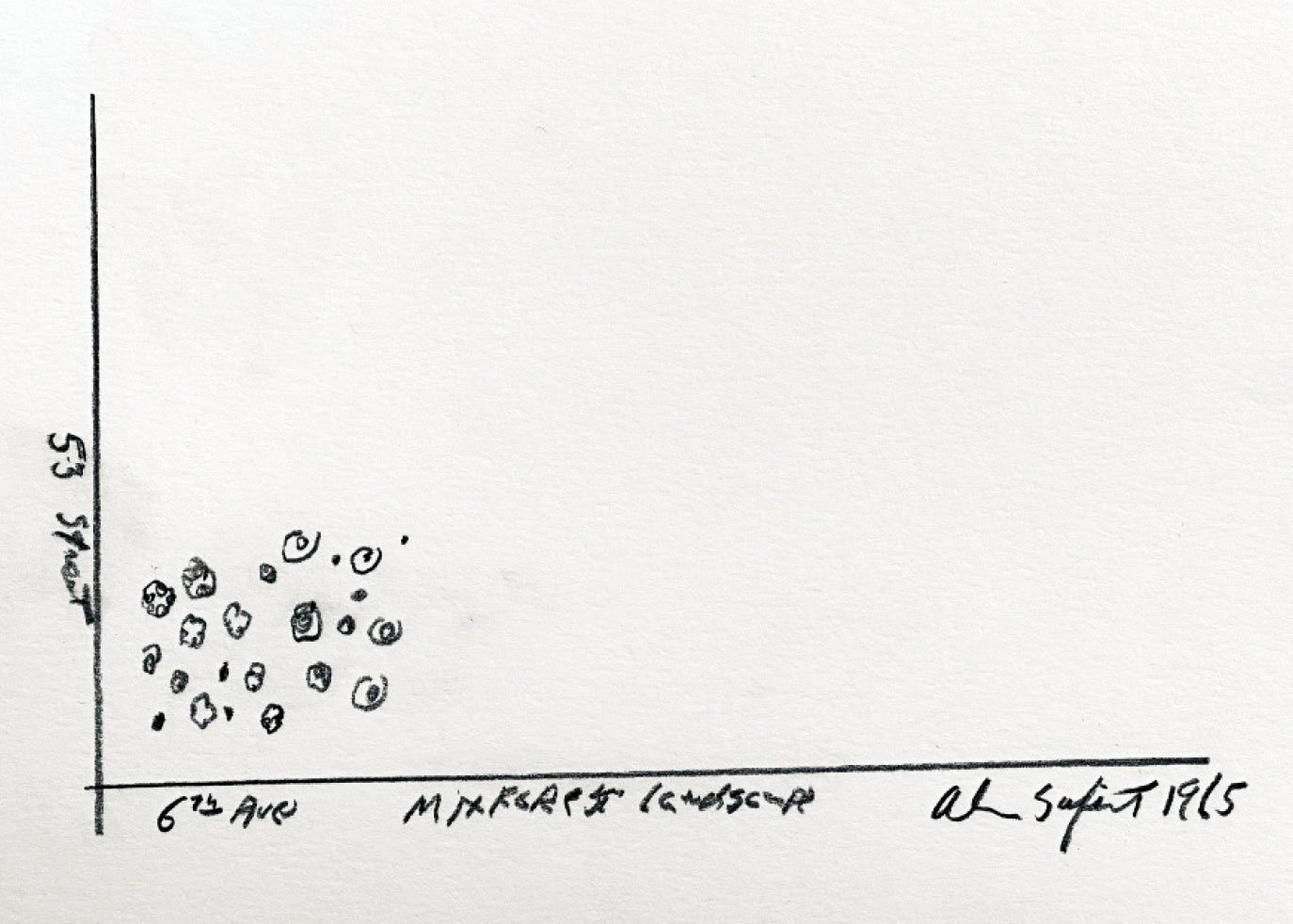
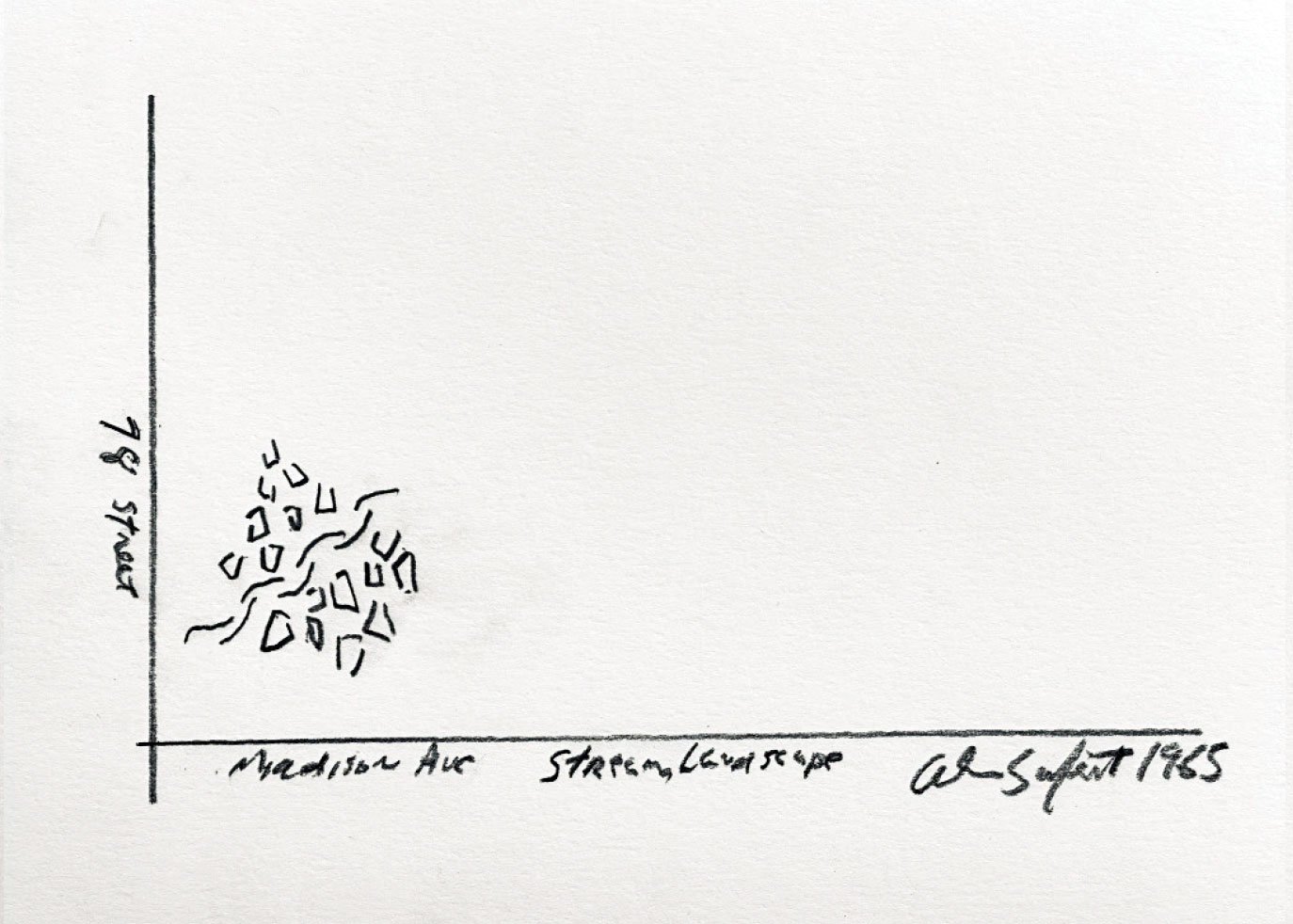
Proposals for several locations in New York where the Time Landscapes could be situated
At the time, there was increasing recognition that historic buildings should be preserved. I thought landscapes deserved the same attention. If we pay homage to old buildings, why not also pay homage to the landscapes that were there before them?
The project took more than ten years to realise. How did an idea you had at nineteen actually become a piece of New York City?
Hoving supported the idea, but he told me I was too young and needed credibility. That pushed me towards MIT. György Kepes, founder of MIT’s Center for Advanced Visual Studies, was running a programme there in which artists and scientists worked together, so I wrote to him explaining the project and saying that I wanted to find scientists and architects who could work with me. He invited me to MIT.
That was the moment when the dream began to become real. I developed a team that included an architect and a botanist. I was still very young, but the people there did not treat me as a kid; they responded to the idea.
Hoving then moved to the Metropolitan Museum and wanted to take the project with him. He introduced me to the board. I will never forget the meeting. Representatives of major banks and corporations were sitting around this oval table. Hoving was presenting the museum’s expansion plans. When he reached my project, he simply said, “This young gentleman is going to be creating an ancient forest for the museum,” and then moved immediately to the next subject. I thought I was going to have to present and defend it, but he never let me speak.
Afterwards he told me that the project was now part of the museum’s master plan. He had never allowed the board to decide whether it was a good or bad idea. He simply presented it as something that was going to happen.
Then Hoving left the museum and the project stalled. Through Elaine Varian at the Finch College Museum I was introduced to Jane Jacobs and Ruth Wittenberg. They supported the work and were instrumental in identifying the site. It was land associated with the highway Robert Moses had wanted to build through Lower Manhattan.
The Greenwich Village community endorsed the forest, but the city still had to approve it. The highway authorities kept raising objections. They told me nobody had ever created a forest there before and asked why they should allow it. They also said the site might still be needed for a highway and that the forest would therefore have to be temporary. I agreed. I thought: you cannot really move a forest, but first let us get it planted.
Then they said the wild trees would be dangerous and required a fence. I agreed again. Then they said the trees would probably die and that if they did, I would have to replace them with city-approved trees. I agreed to that too.
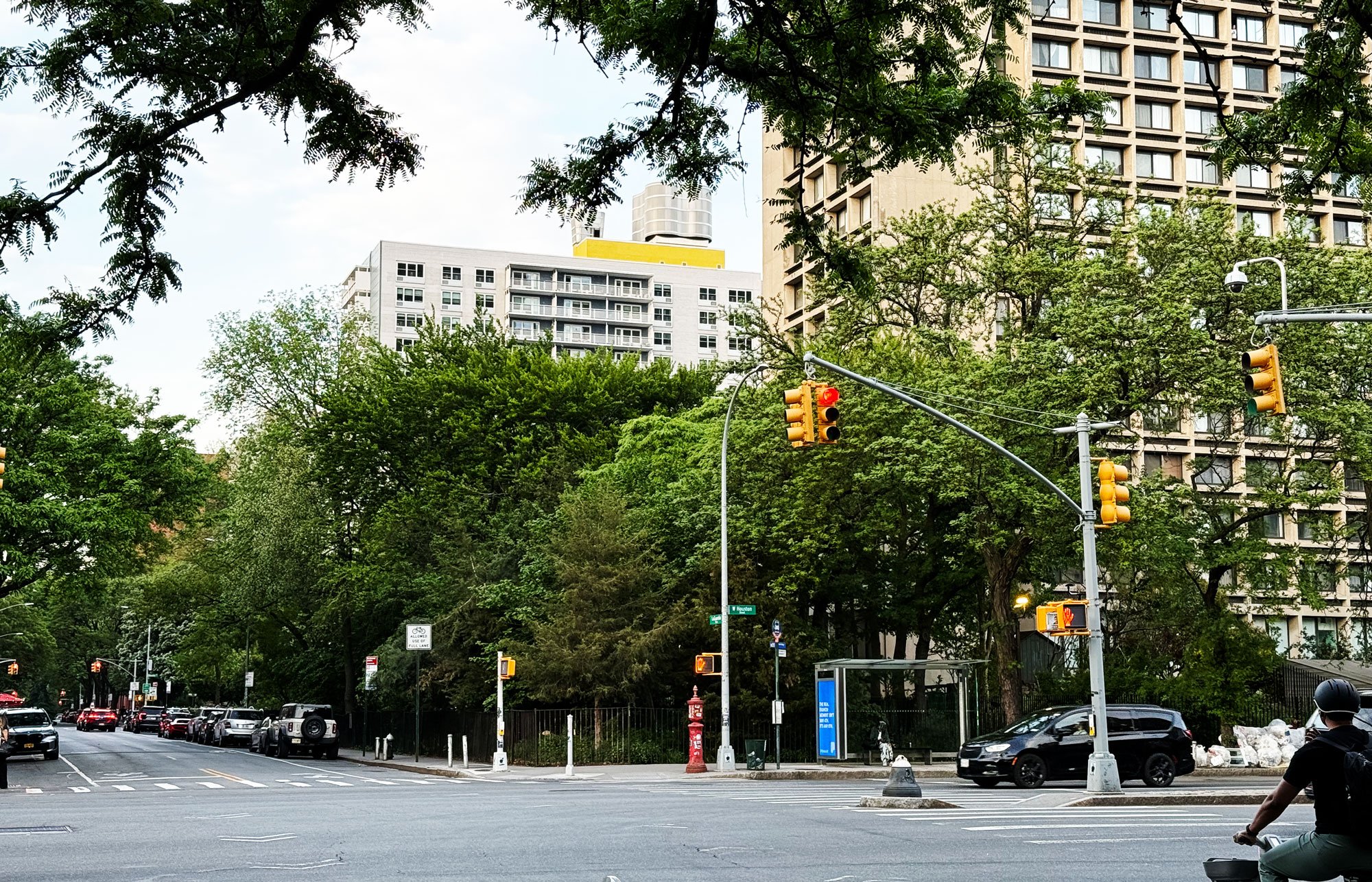
The physical construction is almost the reverse of an untouched forest. The site was already disturbed urban ground. Where did the trees and soil actually come from?
The site was covered with rubble from demolished buildings, so there was no real soil. I also did not want to remove trees from an existing forest in order to create another forest. I wanted to collect them from disturbed areas.
The state highway department was building roads and offered trees that would otherwise be removed. So some of the indigenous trees for Time Landscape came from land being disturbed by highway construction.
The soil was another extraordinary coincidence. There was renovation work taking place in front of New York City Hall. The contractors had removed the paving and cobblestones and dug down into older soil beneath the plaza. Through people involved with the project, they contacted me and asked whether I wanted it. Of course I said yes. That soil was brought to the site and placed over the rubble. I sometimes say that the gods of the earth gave me the correct soil. It came from below City Hall, and some of the seeds germinated from the ancient soil.
Did you understand Time Landscape as ecological restoration, or were you reconstructing an image of the pre-colonial forest?
I researched early English records describing the trees that settlers were cutting for timber. That gave me markers for what species had grown in particular areas. I also found descriptions of Minetta Lane, which is still nearby and had once been a trout stream, and accounts of people travelling from Broadway, which had been an Indigenous trail, towards Minetta Lane and sleeping beneath a beech forest.
That gave me the story for the site. Time Landscape lies between those places, so I used those references to create a beech-oak forest.
But it was never meant to remain a fixed moment in time. That is essential to the name Time Landscape. I wanted it to evolve into the fabric of the city. The city maintains it, the community has always been involved with it, people enter it, birds bring in seeds, vegetation changes. Now climate change is affecting it as well. It becomes almost a barometer of what is happening to the city.
It started as an ancient forest, but I want the transitions to remain visible. Ecology changes, human beings alter it, animals alter it, climate alters it.
When I visited, I noticed some planting and traces that did not seem to belong to the historical reconstruction, to the artwork. How do you see these later interventions in Time Landscape?
I did not actually label it an artwork at the time. I had been making art since childhood, but with this I did not say it was art and I did not say it was not art.
From the beginning, I wanted the community to participate. The community voted for the project; that political support was one of the reasons the city could not simply dismiss it. Although the city required the fence, I wanted people from the neighbourhood to be able to enter, participate and help with the forest. It was supposed to become part of the city rather than remain isolated from it.
The fence is particularly interesting because it was originally imposed on you. How do you feel about it?
At first I objected to it. Now, I think it makes the area special. It creates a question: why is this forest here, and why is there a fence around it? Without that, it could simply be absorbed as another part of a park.
So even though the fence was not part of my original idea, I now appreciate it. But if the community decided tomorrow that it wanted to remove it, that should be their decision. Again, the important word is time. The work is changing.
Many of your other projects also uncover or reconstruct particular moments in the history of a landscape. How do you decide which moment to make visible?
Each project tells a different story about the history of the land. In Germany I worked with a post-Ice Age landscape. I was interested in a warmer climatic period and in vegetation that had shifted geographically over time. I brought back species associated with that history and used the project to look at climate as something that has never been completely static.
In Circles of Time in Tuscany, I created a series of rings made from indigenous materials representing different histories of the landscape, from a primeval forest to agricultural land. The outer ring is productive: olives and grains are harvested there by the local community. The form also responds to the curvature of the surrounding hills.
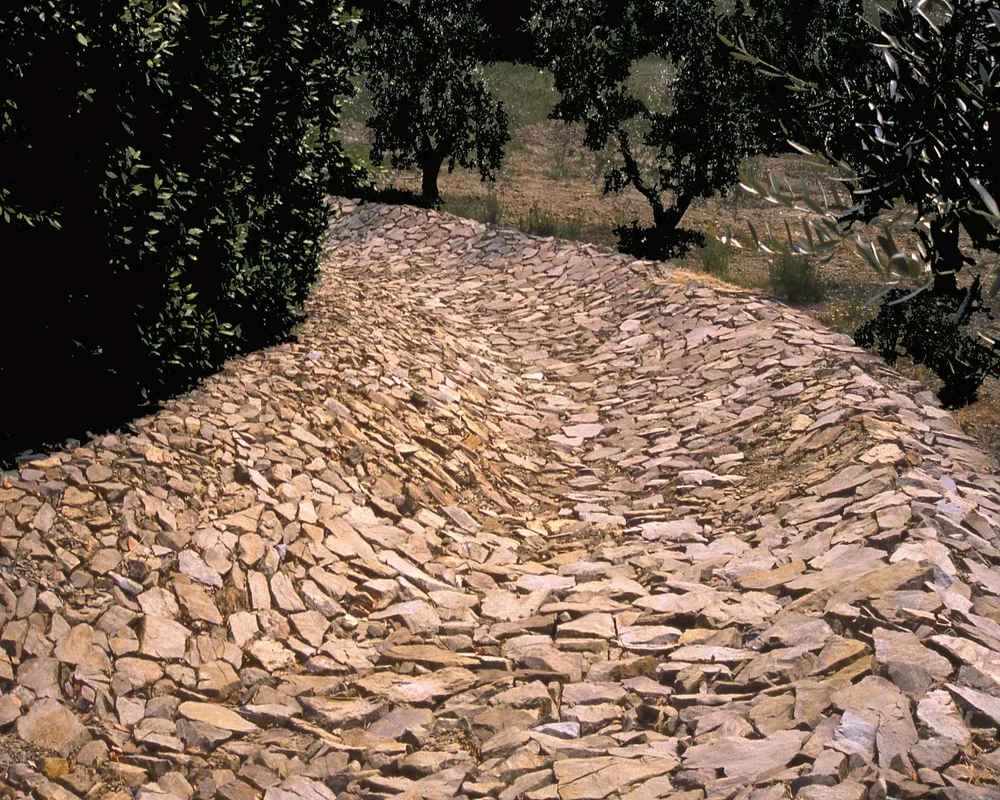
I sometimes call myself a visual archaeologist. We devote enormous attention to layers of human history, but we tend to ignore the historical layers of the land itself.
In Chicago, for example, I drilled through the urban surface to reveal the marshland structure below, because the city was built over marshland. I wanted to show that beneath the concrete there was, and still is, another living system. Each work has to reveal a different story.
You are usually discussed in relation to Land Art, alongside artists such as Robert Smithson and Michael Heizer. Did you understand yourself as part of the same movement at the time?
No. Initially I was not even aware of the Earth artists. I was concentrating on Hoving and on creating a functional living landscape within a museum structure. I encountered that art world later.
In the early 1970s I was invited to panel discussions about Land Art with people including Heizer and Smithson. It felt as though we were Martians speaking different languages. They were talking about the formalism of art. I was talking about living trees and whether they would survive.
We were all working with land or nature in some sense, but the concerns were very different. I was interested in creating living systems and in involving the community around Time Landscape. I was not so interested in being critical of society; I was trying to create a positive message rather than being against something.
You have also compared your working method to Duchamp’s use of found objects. Yet some of your earliest works were not merely representations of living systems; they were literally alive.
Duchamp made people look again at ordinary found objects by identifying them as art. I was interested in something related, but within the natural environment. In early gallery works I mapped a particular forest and selected leaves, twigs and other organic material from precise locations, then repositioned them in the gallery according to that mapping.
Even earlier, in the 1960s, I made works with living microbes on canvas. They were actual microbes growing on the surface. When they dry, they become dormant. They are not dead. If you spray them with water, they can come back again.
Your recent project Growth Between the Cracks (2025) seems almost like the inverse of Time Landscape. Instead of reconstructing a historical landscape, you asked people to collect soil from cracks in the pavement and see what was already there.
That also goes back to childhood. I was always fascinated by cracks in the sidewalk. In spring, plants would begin growing through them. It was a small sign that there was life beneath the city.
In the early 1970s I began photographing cracks and also tracing rivers that had once existed in Lower Manhattan. I would photograph the concrete surface and pair it with maps showing what had been underneath it. Then I made a work at 112 Greene Street using soil and seeds collected directly from cracks.
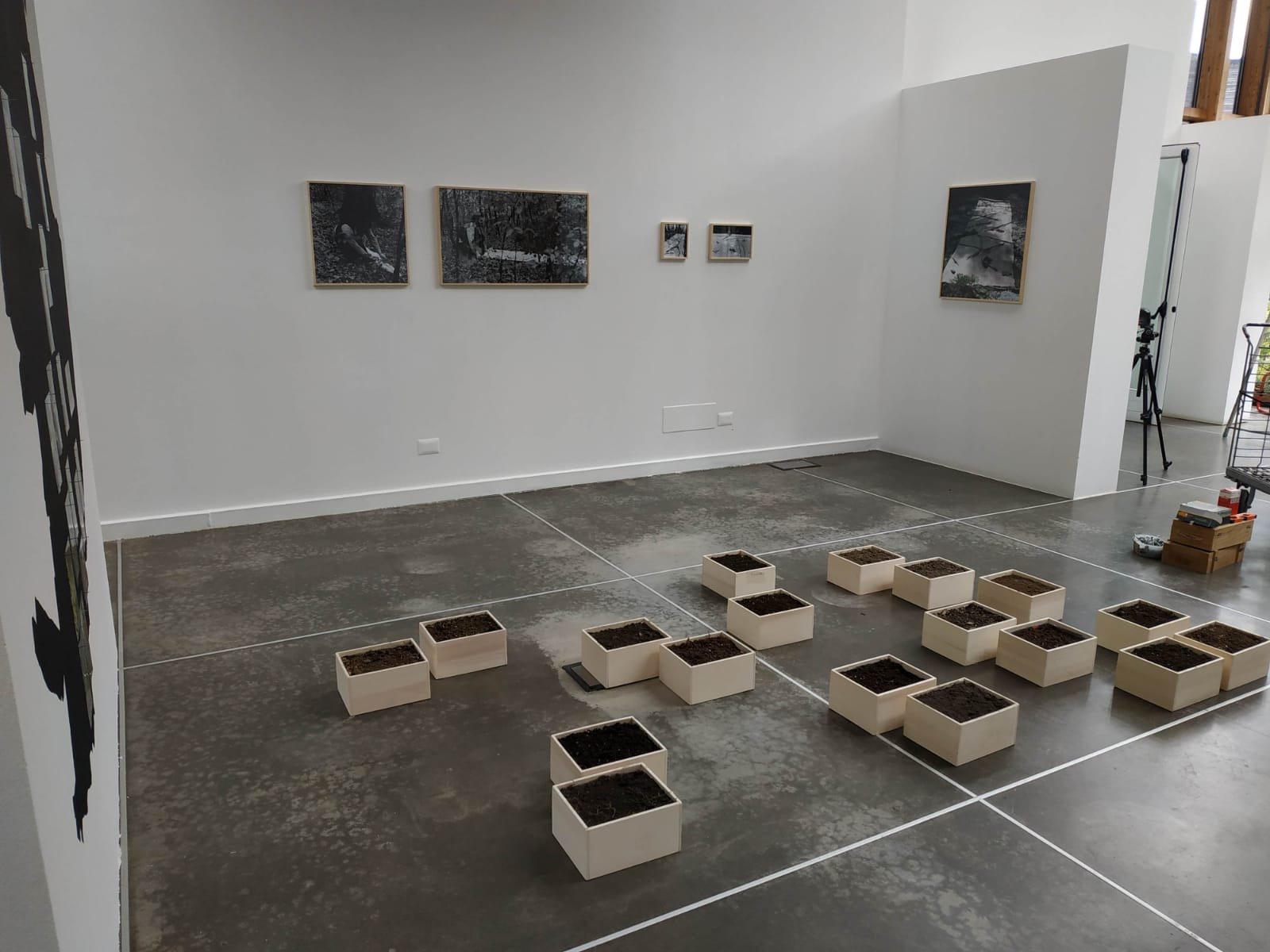
Years later, for a project in Finland, I invited people from the community to collect soil from pavement cracks themselves. We placed the material in small containers and allowed whatever was in it to grow. A botanist who examined the plants told me that some had not been seen there for a very long time and that the seeds had remained dormant.
For me the important thing was the discovery that the city is not as sealed as it looks. You do not always have to reconstruct the living landscape; sometimes it is already pushing back through the surface.
What are your current exhibitions about?
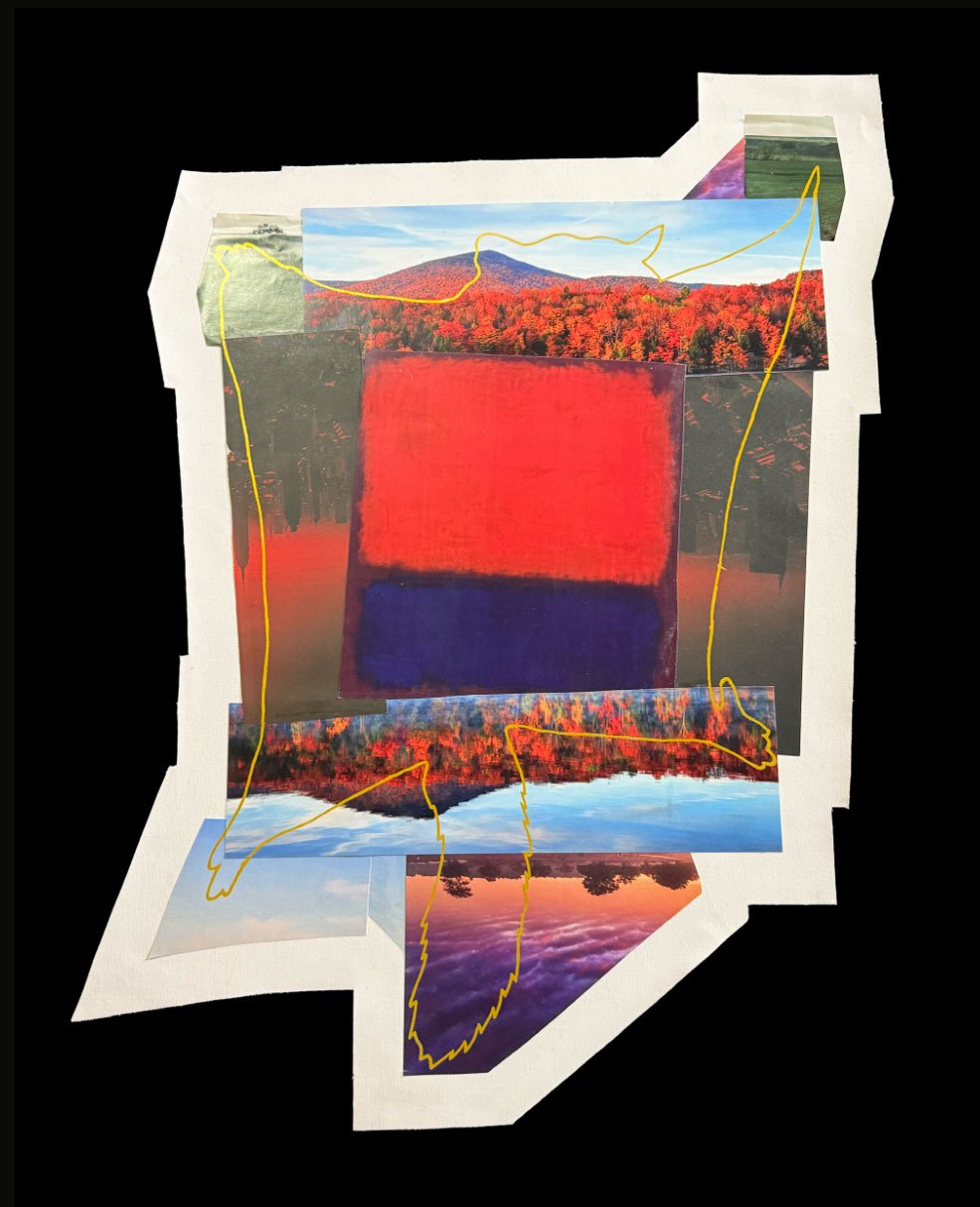
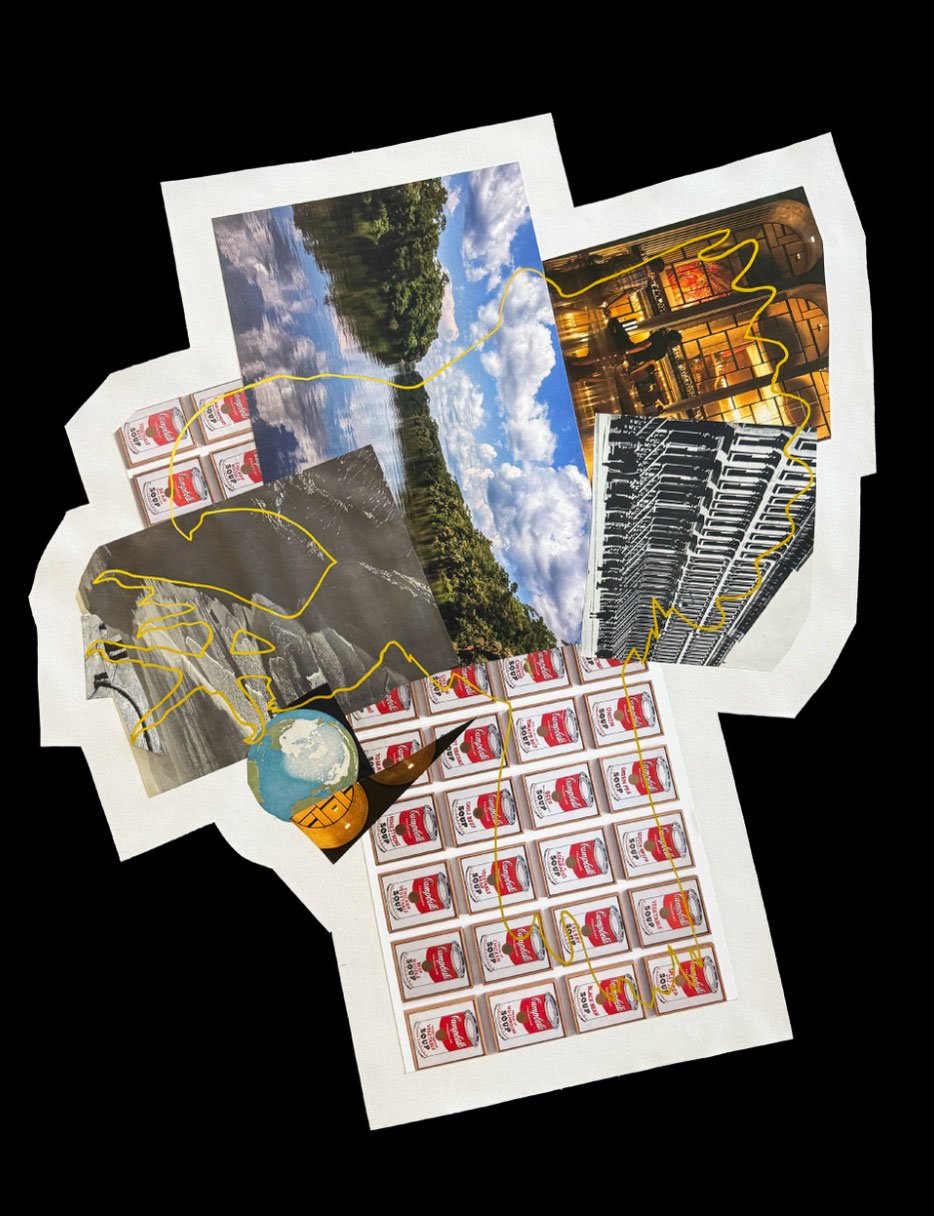
I recently released a book featuring a series of collages I have been working on for over ten years. These are the works I exhibited in Tokyo in October. Collages of the Endangered: Echoes of a Vanishing World, endangered species become luminous monuments to a planet in transformation. Each work connects a specific region of the world with artists native to that landscape, constructing intricate collages of cultural imagery, collective memory, commercial symbolism, and historical reference within gold-leaf silhouettes of threatened animals from those territories.